
GK
General Knowledge
The test every CDL applicant takes first.
- —Stopping distance and speed management
- —Following distance and space cushions
- —Hazardous locations and railroad crossings
50 questionsDetails
Practice tests for the five CDL written exams, written from the same material your state handbook uses — with a plain-language reason under every answer, so a wrong answer still teaches you something.
Buy the one you're sitting, or take the whole set at once. Every bank is 100 questions with explained answers and unlimited retakes.
The test every CDL applicant takes first.
Removes the air-brake restriction — and it's the one people fail.
For buses, shuttles, and anything carrying people.
Placards, papers, and the rules that keep you out of trouble.
Surge, balance, and why tankers roll.
All five written-test banks — General Knowledge, Air Brakes, Passenger, HazMat, and Tanker — with every question, every explained answer, and unlimited retakes. Built for someone going for the full CDL with endorsements, or a driver putting a class through prep.
Saves $36 against buying them separately.
Every question shows the correct answer and the reason it's correct the moment you finish. The reason is written the way an instructor would say it, not the way a handbook prints it.
Unlimited retakes, and each attempt reorders the questions and the answer choices — so you can't pass by remembering which letter you picked last time.
Your result breaks down by topic, so instead of re-reading the whole chapter you go straight at the one that's actually tripping you up.
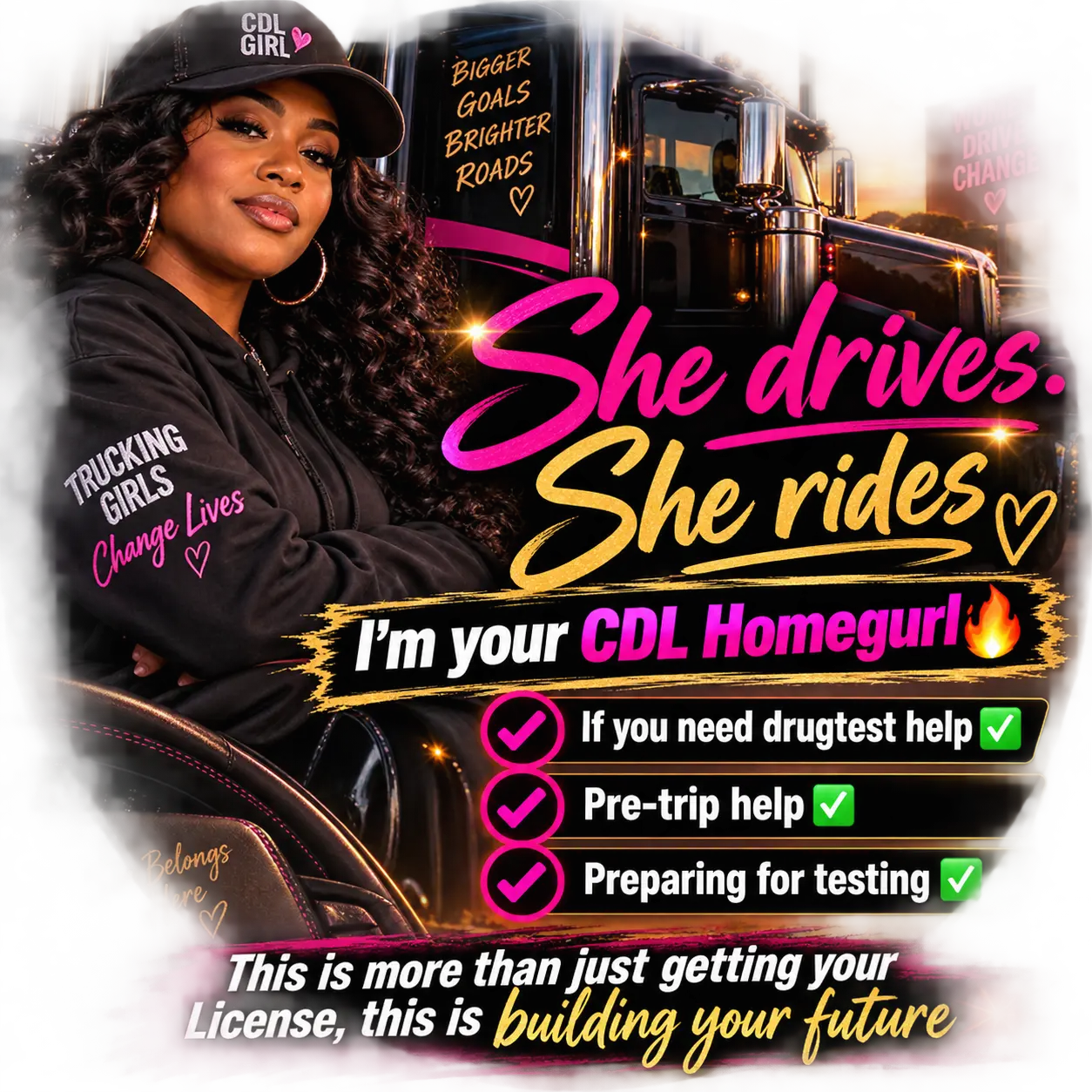
SheDrivesSheRides came out of real driving time — concrete trucks, tankers, straight trucks, and tractor-trailers — across a career that has stayed accident- and injury-free. That record is not a marketing line; it is the reason the training is built the way it is.
Alongside the practice tests, the company runs drive-away and vehicle delivery services and hands-on CDL Class A and Class B training, with a focus on mentoring new drivers through the written exams and into their first job.
What the practice tests are, what they aren't, and how you get in after you pay.
After payment you're given an access code that opens your exam straight away — no account needed. If you'd rather keep your scores and retake history, make a free account and attach the code to it.